CRITICAL TEXT

Written during the TAL (Tech Art Lab) residency in Rio de Janeiro between January and February 2026, this critical text by curator Gabriela Maciel explores David Elia’s practice as a powerful "critical manifesto" positioned at the intersection of contemporary art, social design, and ecological resistance.
During the curatorial follow-up that took place in the SOLO residency program, I could notice that David Elia’s practice presents itself as a critical manifesto between contemporary art and social design. His work investigates how materials, images, and objects convey histories of ecosystems, territories, peoples, and knowledge, revealing layers of cultural and environmental memory.
Moving between figuration and abstraction, object and sculpture, he constructs a symbolic field in which ecology, politics, and history become inseparable, particularly within the Brazilian colonial context shaped by exploitation, violence, and cultural resistance.
Research occupies a central role in Elia’s practice, functioning as a way to project sensitive fields of reflection on nature and its transformation. He evokes portraits, landscapes, forests, architectures, both artificial and natural systems not as literal representations, but as perceptual and emotional experiences.
Through color, visual rhythms, and organic structures, his paintings engage with science, cartography, botany, and historical processes of cataloguing nature, while simultaneously dissolving into abstractions that expand the poetic dimension of his work. In doing so, they connect matter, memory, time, and movement.
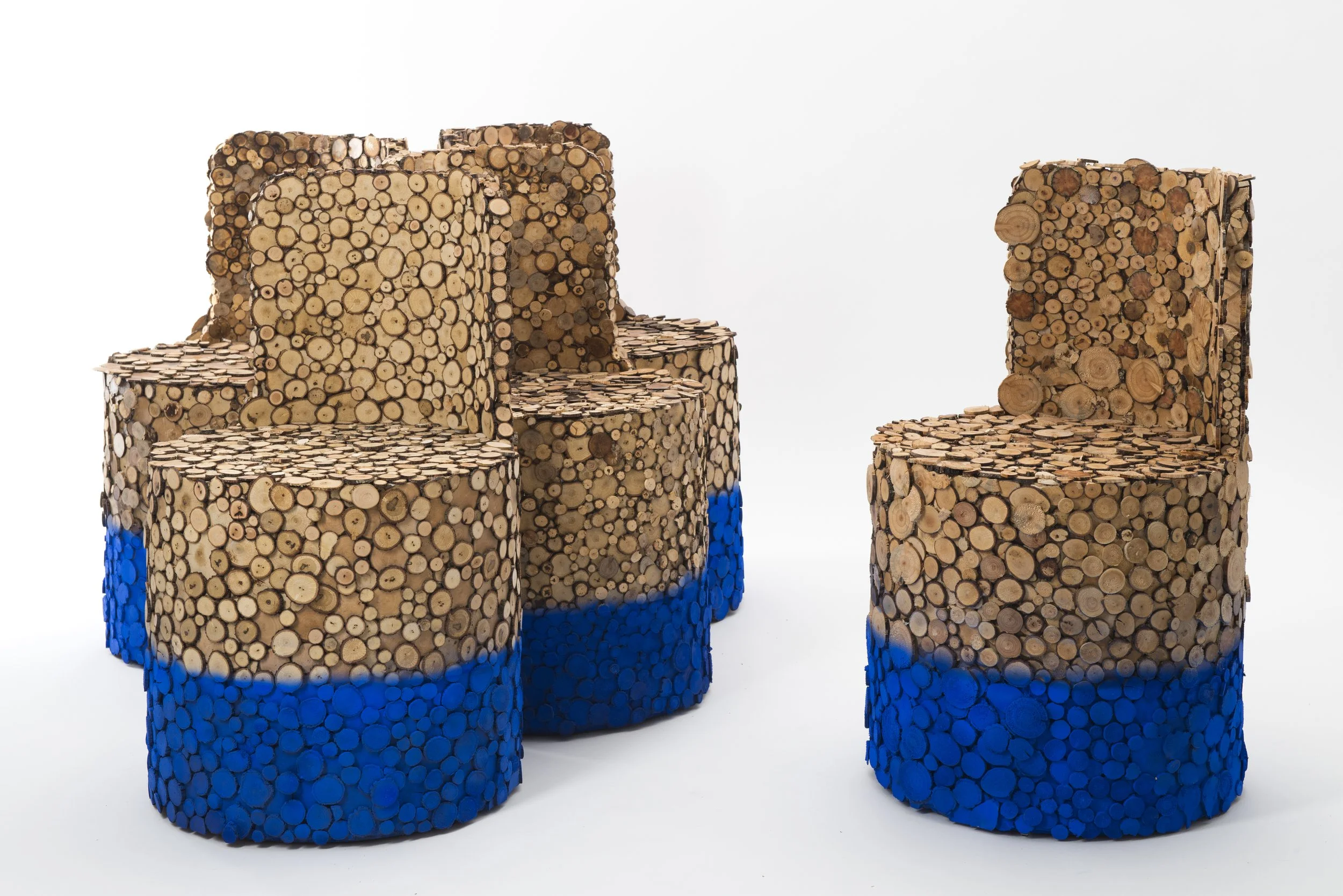
In the Desmatamento project and Collection, the forest is presented as a wounded body. The forms reveal the cutting of trees and wood, absence, void, and limits, reclaiming functionalism as a site of political awareness. More than a denunciation, these works invite observation, recognition, and responsibility in the face of the climate crisis.

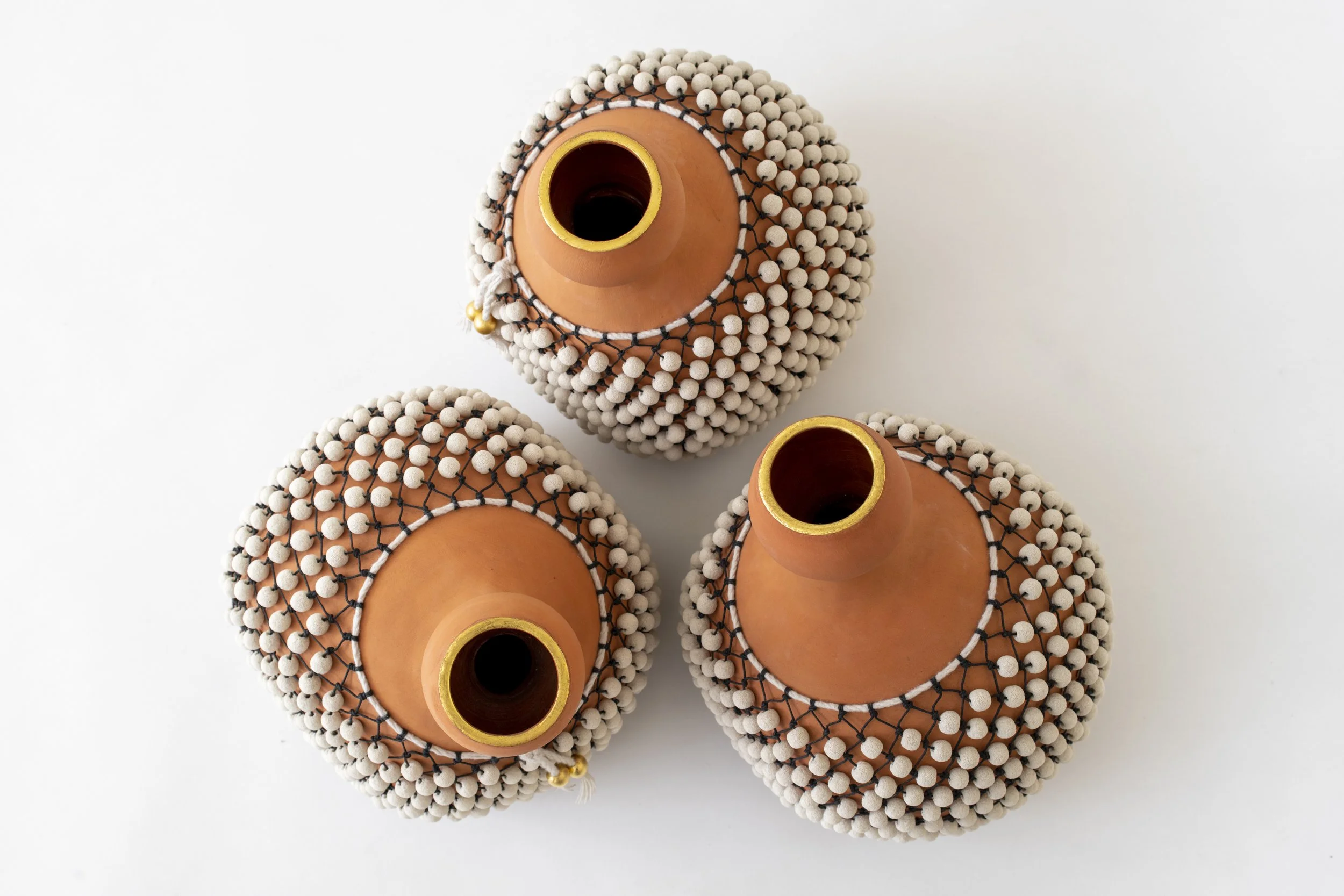
In the Urna Collection, form, clay, and Yawanawá beaded bracelets symbolize mourning for lives who have been massacred, the Indigenous strength of preservation under constant threat. The urns function as devices of memory that affirm life, affection, and care as political gestures.
The Xequere series introduces rhythm, body, and ancestry, connecting nature and Afro-Brazilian culture, reminding us that ecology is also a collective, spiritual, and sensorial practice.
By working through multiple forms of transformation, David Elia affirms that there is still time to rebuild our relationship with the land through respect, memory, and imagination. His work proposes a space of contemplation, listening and reflection, where art and critical design become tools for imagining more conscious and possible futures.
— Gabriela Maciel, February 9, 2026